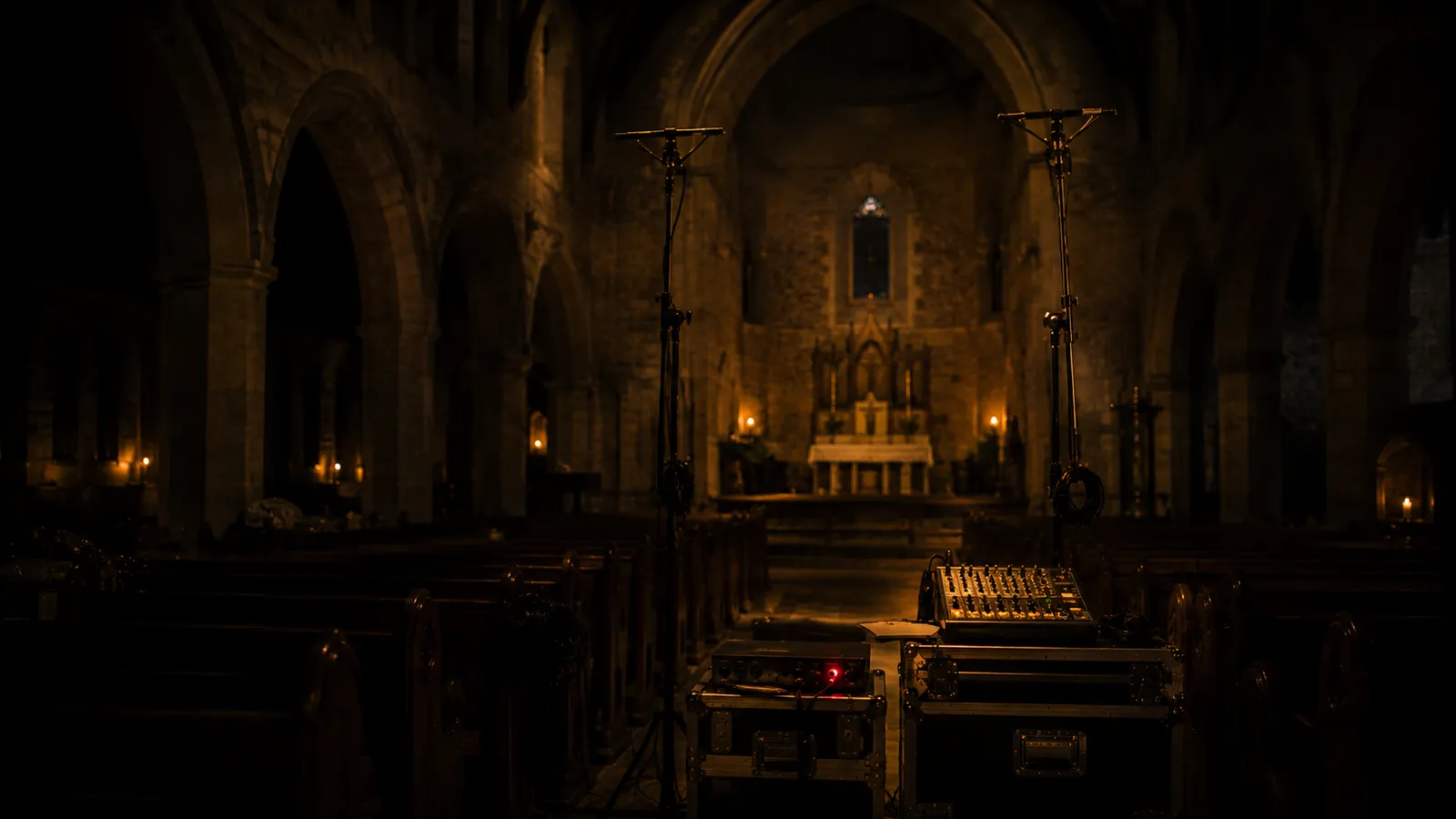
Not every recording belongs in a studio. A band at the peak of a tour run. A choir in the sanctuary where it actually sings. A songwriter in the living room where the songs were written. Some performances only exist in a place, in front of people, in a moment — and the job is to go capture them there. That's location recording, and it works differently than a studio session in ways worth understanding before you book one.
The one-take reality
In the studio, we can stop, adjust, and go again. At a live show, the first take is the only take. That changes where the effort goes: preparation carries the whole job. Before a note is played I want to know the room, the set list, the stage plot, how many performers, what the venue's system looks like, and where I can physically set up. The performance is yours; making sure nothing about the capture is left to luck is mine.
It also means redundancy matters. Professional location work records safety copies at different levels, so one unexpected peak — a drummer who hits harder with an audience, always — doesn't cost you the take of the night.
What the room gives you (and takes)
The sound of a real space is the reason to record on location — the air around a choir, the energy of a crowd, the way a band actually plays in front of people versus in front of a control-room window. A location recording that fights the room usually loses. The craft is choosing microphone positions that let the room work for the recording, capturing enough separation between sources that the mix stays controllable later.
That's the trade: less isolation and control than the studio, more life than the studio can manufacture. For the right project, it's not a compromise at all.
After the capture: the mix makes it a record
Raw live recordings are documentary evidence. The mix is what turns them into something you'd release. Balancing the performance, managing the crowd and the room, taming stage bleed, and mastering the result for streaming or a live release is its own job — which is why capture and mix are offered together as a bundle, and why a live show mix is available even for recordings you already have in hand. The full options are on the services page.
Planning one that succeeds
If you're considering a location recording, the questions that matter most:
- Why this room? If the space isn't part of the sound or the story, the studio will serve the music better.
- Is the performance ready? A live record is a portrait of where the band is right now. Everything in Rehearse Like You'll Record applies double when there are no second takes.
- Does the venue know? Load-in access, power, a spot for the rig, and the house engineer's blessing all need arranging in advance — not on the night.
Recording a release show, a session in a special space, or a live set for video? Get in touch with the date and venue, and we'll plan the capture properly.