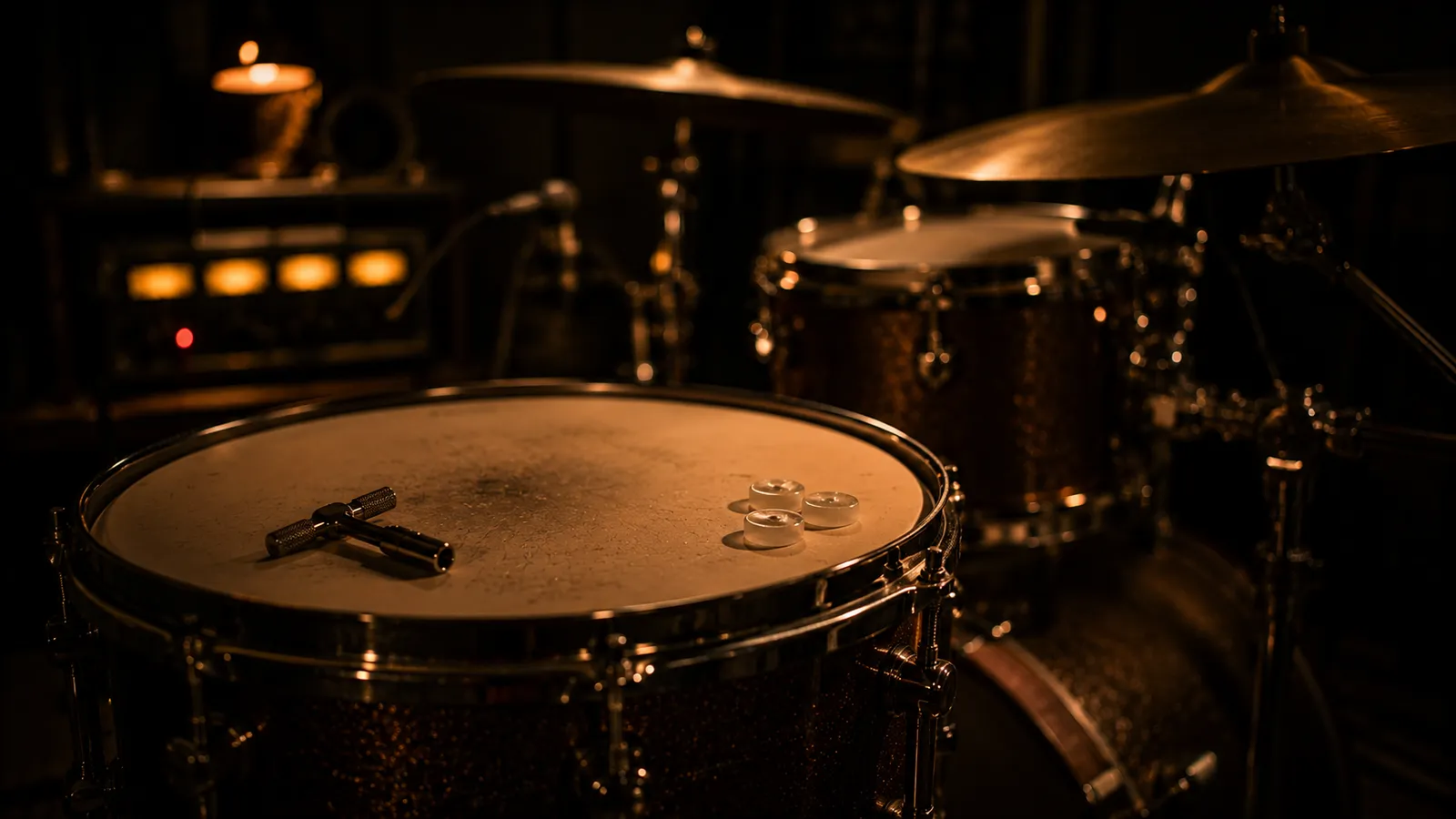
Drums are the instrument in the room that gets recorded from the most angles at once — kick mic, snare mic, overheads, room mics, sometimes more. Every one of those mics hears your tuning, your rattles, and your hardware noise. There's nowhere to hide a poorly tuned kit once that many microphones are pointed at it. The good news is that most of what makes drums sound great on tape is work you can do before you ever load the car.
Here's the checklist.
Change your heads a week out, not the day before
Brand-new heads stretch and need time to seat and hold their tuning. Put fresh batá, snare, and kick heads on about a week before your session — long enough that they've settled and you've had time to fine-tune them, not so far out that they've gone dead. Showing up with heads you just installed that morning means fighting tuning drift the whole day, the same problem as changing guitar strings too late.
Tune to the room and the song, not just to a formula
There's no single "correct" tuning — the right tuning depends on the song and, to a real degree, the room it's being recorded in. A tight, punchy tuning that cuts through a fast rock track might be completely wrong for a slower, more open ballad that wants a fatter, more resonant kit sound. Bring reference tracks and think ahead of time about what feel the song wants: does it want a low, boomy kick or a tight, present one? Does the snare want to crack or want to sing? We can dial in specifics once you're here, but coming in with an idea of the target saves time and gets you closer faster.
Chase down rattles and squeaks before session day
A rattling snare wire, a buzzing lug, a squeaky kick pedal, a loose hi-hat clutch — these are minor annoyances live and major problems on a multi-mic drum recording, where close mics pick up every bit of extraneous noise. Go through your kit piece by piece at home: play each drum and cymbal individually and listen for anything that shouldn't be there. Tighten what needs tightening, oil what needs oiling, and replace what's worn out. It's much faster to solve at home than in the room on the clock.
Bring backups
Pack a spare snare drum, extra sticks, spare batá heads if you can, and any small hardware (a spare kick pedal beater, extra hi-hat clutch) that's cheap insurance against a bad day. A snapped stick or a torn head shouldn't turn into a long delay if you've got a backup in the car.
Decide on dampening deliberately
Moon gel, o-rings, a wallet on the snare — dampening tools are useful, but they're a choice, not a default. Over-dampening a kit can suck the life out of a recording just as easily as an unwanted overtone can clutter it. Think about what each drum needs rather than muting everything out of habit. Bring your usual dampening gear, but be open to experimenting once mics are up and we can actually hear what's translating.
Why a well-tuned kit needs less work later
A kit that's tuned well, free of rattles, and dialed to the song needs far less shaping at the mixing stage. EQ and gating can only do so much to correct an overtone that shouldn't be there or a snare that's fighting the kick for the same frequency range. Get the tuning right at the source, and the mix engineer — often also me — gets to spend that time making the drums sound bigger and more exciting instead of cleaning up problems that could've been solved with a drum key.
The takeaway
Great-sounding drums on a record start with a kit that's been cared for in the days before the session, not adjusted on the fly once mics are up. Fresh heads with time to settle, tuning chosen for the song, rattles hunted down, backups packed, and dampening used with intention — do that work ahead of time, and the mics will thank you.
Come in with a tuned, quiet kit and we'll spend the session capturing it at its best. Revolutionary Recordings has been recording drummers across the Philadelphia metro since 2006. Book a session.