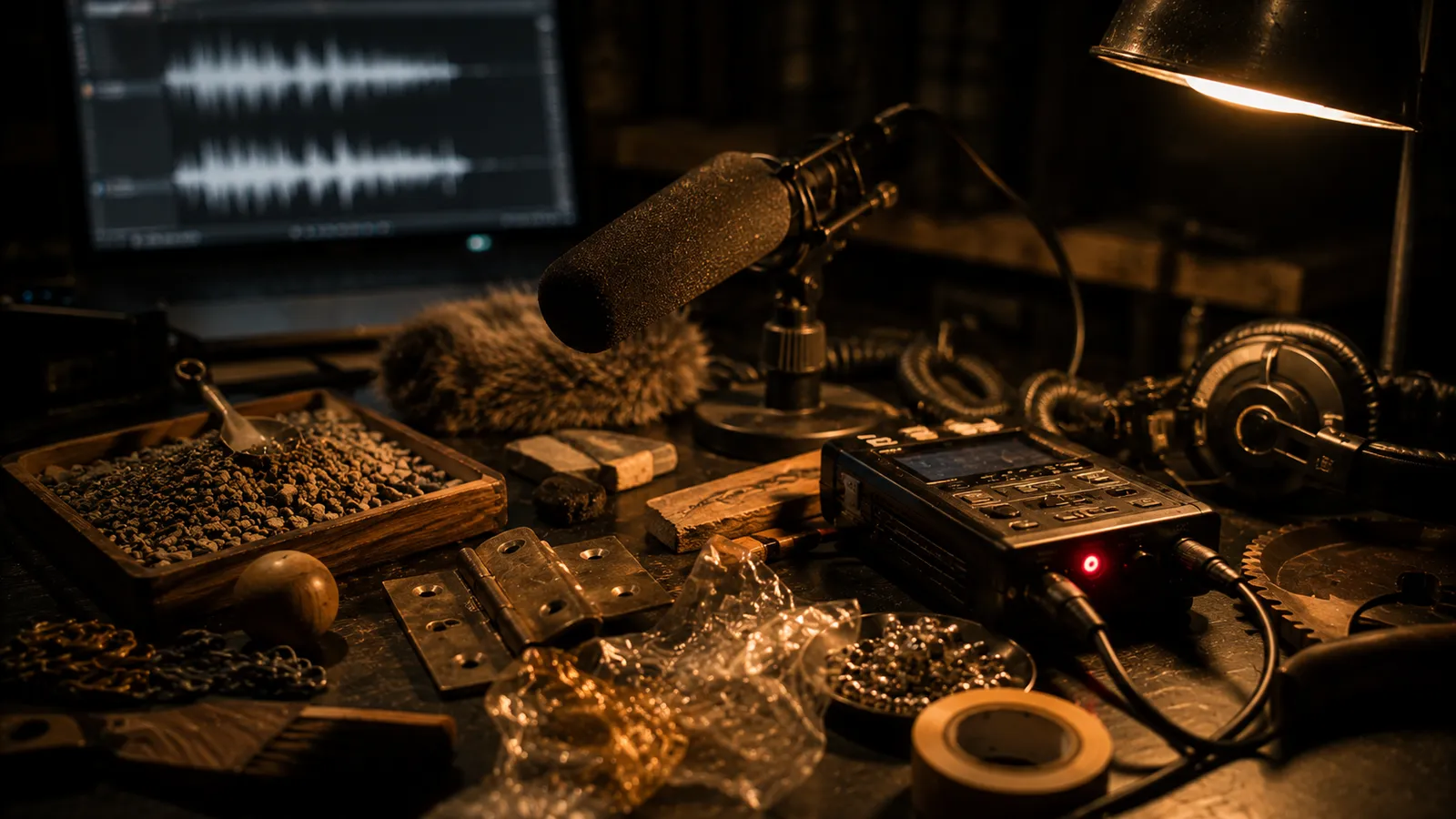
Stock sound libraries are genuinely useful — I'd never tell a creator starting out to avoid them. But there's a moment in every growing channel, podcast, film, or brand where stock starts working against you. You hear your intro music on someone else's video. The whoosh you used is the same whoosh in a thousand other edits. The ambience almost fits the scene, but not quite, and "almost" is suddenly the most noticeable thing in the mix. That's the moment custom sound design starts earning its keep.
Sound is branding you can't see
Audiences recognize shows by sound faster than they realize. A signature intro, a consistent sonic palette, transitions that belong to your edit and nobody else's — that's identity, the same way a logo is. Stock can't give you that, by definition: its whole business model is selling the same sound to everyone. Custom sound exists once, for you.
What custom work actually covers
Sound design at the studio spans a few distinct jobs, and most projects need only one or two — the full list lives on the services page:
Custom sound effects. Designed and recorded for your specific picture or podcast — interface sounds, hits, transitions, the effect that has to match what's on screen exactly rather than approximately.
Full soundscapes. Ambience and atmosphere built for a scene or an episode: a city that sounds like your story's city, a room tone that carries mood instead of just filling silence.
Music licensing for content creators. Tracks you can license for your videos and shows with terms that are actually clear — no wondering whether a claim is coming. (This need is a big part of why I'm building the RR Production Music Library, launching this fall.)
Sync licensing consultation. If you're on the other side of the equation — an artist wondering how your music gets into video, or a creator confused about what a license does and doesn't allow — a consultation sorts it out before it becomes a legal headache.
The brief is half the work
Custom sound starts with a conversation, not a session. The useful brief isn't technical — it's references and feelings. Show me the edit. Point at a moment and tell me what it should feel like. Send examples of sound you love from other work and say what you love about them. From there I'll scope what the project actually needs, which is often less than creators expect: a strong intro/outro, a small kit of signature transitions, and one good ambience bed cover a remarkable amount of ground.
Start smaller than you think
You don't need a film-studio sound budget to stop sounding like stock. Most creators get the biggest jump from replacing the two or three sounds their audience hears every single episode. Do those right, keep stock for the rest, and upgrade over time.
If your project has outgrown the library folder, tell me what you're making — link me to your work, and I'll tell you honestly where custom sound would move the needle and where it wouldn't.