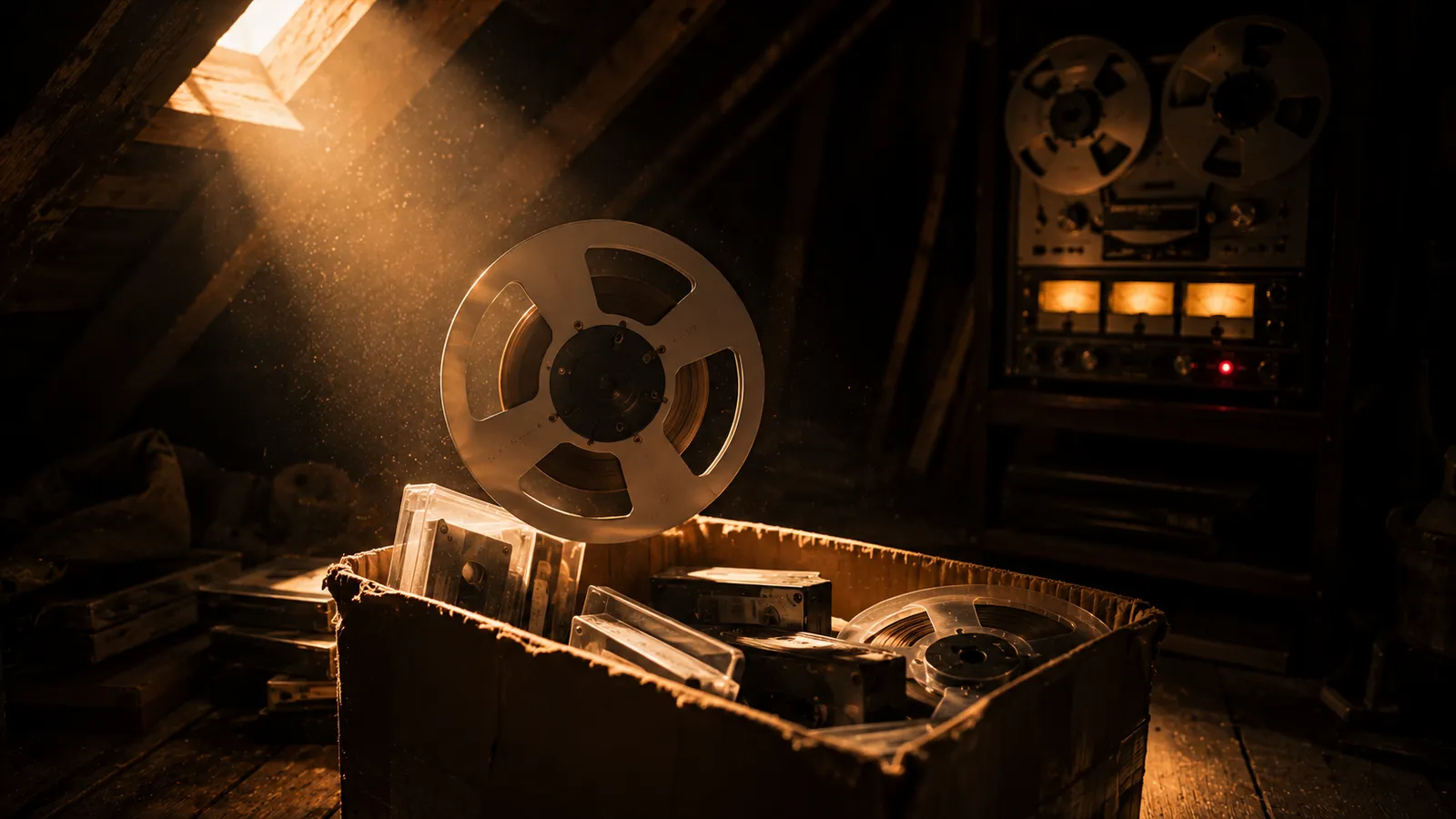
Somewhere in your house — or your parents' house — there's a box. Band rehearsal tapes from the 90s. A grandparent's voice on a cassette. A reel from a studio that closed decades ago. Vinyl that never made it to streaming and never will. Every year that box sits, the audio in it gets a little harder to recover — and unlike most things in this business, the deadline is real. Tape doesn't wait for you to get around to it.
Magnetic media is quietly dying
Cassettes and reel-to-reel tape degrade in storage, played or not. Binders break down, oxide sheds, and some tape formulations from certain eras suffer well-known chemical breakdown that makes them unplayable without careful handling. Heat, humidity, and attic storage all accelerate it. The practical takeaway isn't panic — plenty of decades-old tape transfers beautifully — it's that every transfer gets harder and riskier with time, and a tape only has so many good plays left in it. You want a proper transfer to happen on one of them.
Vinyl is more stable, but each play of a worn or damaged record does its own damage, and rare pressings that never went digital exist only as long as the physical disc does.
What a professional transfer actually gets you
The difference between a professional transfer and a USB turntable from a big-box store is everything around the capture: properly maintained and aligned playback machines, correct playback speed and EQ for the format, clean gain staging into quality converters, and an engineer listening the whole way through — because catching a problem during capture beats discovering it after the tape's best play is spent.
You end up with high-resolution digital files that will outlive every format in that box, plus copies in whatever everyday formats you need.
Restoration is a separate decision
Transfer gets the audio off the dying medium. Restoration is the optional next step: reducing hiss, hum, clicks, and dropouts, repairing damaged sections, and bringing tired audio back toward how it sounded when it was made. Not everything needs it — a clean tape transfer often stands on its own. When a recording matters enough, though, restoration can be striking, and I'll always tell you honestly whether it's worth it before you spend the money. Details on both are on the services page.
How to triage the box
A simple way to decide what to digitize first:
- Irreplaceable and personal first. Voices of people who are gone. One-of-a-kind performances. There is no second copy of these anywhere.
- Unreleased music second. Demos, live sets, studio reels — anything that exists nowhere else.
- Commercially released material last. If it's on streaming, the clock isn't ticking the same way.
Don't try to play questionable tape on questionable equipment "just to check what's on it." That check can be the play that takes the recording with it. Label what you know, note anything visibly damaged, and bring it in as-is.
If you've got a box like this, get in touch and tell me what's in it. We'll figure out what it needs — and get it safe.