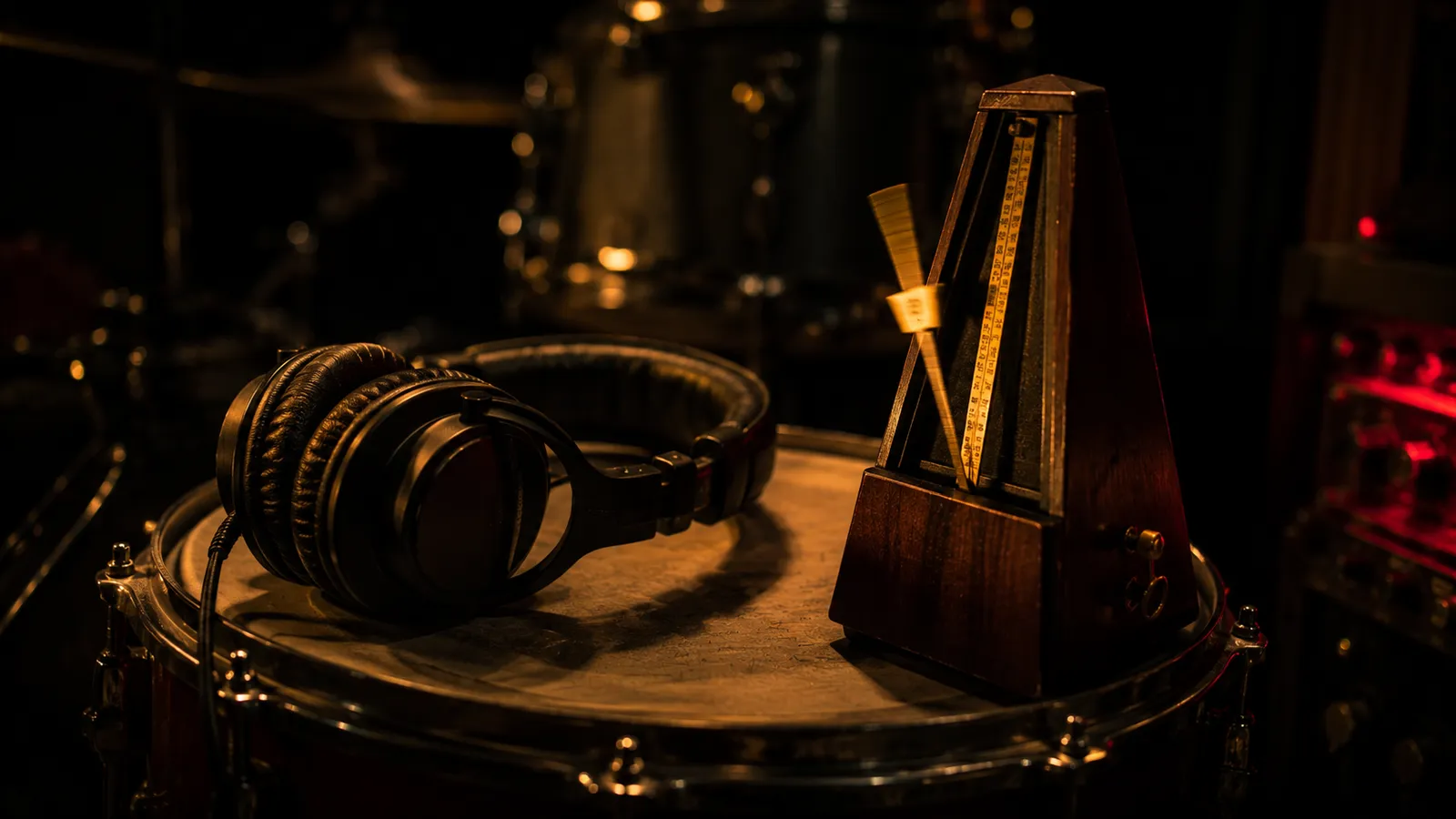
"I don't want it to sound like a robot." I hear it in nearly every first session, and it's a fair worry. Played wrong, a click track can flatten a performance and squeeze the life out of a groove. Played right, it does the opposite — it frees you up. The difference is entirely in the preparation.
Here's how to use a click and still sound human.
Why a click earns its place
A click locks your song to a steady grid, and that grid pays off all the way down the line. Edits become clean. Overdubs line up without a fight. Adding a string section or a guest verse later is trivial when everything sits on a known tempo. Without a click, those same tasks turn into hours of nudging audio around — time you'd rather spend on the music.
It also exposes timing honestly. Live energy hides a multitude of small rushes and drags. A click doesn't. That's uncomfortable at first, and then it makes you a tighter player.
Practice with it long before the session
This is the part people skip, and it's the whole game. You cannot meet a click for the first time on session day and expect it to feel good. Spend weeks playing to a metronome at home until it stops feeling like an opponent and starts feeling like a floor under your feet.
Start slow — slower than the song. Lock in, then bring the tempo up gradually. The goal is for the click to disappear into your playing, so you're no longer chasing it; you're resting on it.
Subdivide
If a quarter-note click feels too sparse and you keep drifting between beats, subdivide. Count the eighths or sixteenths in your head — or have the click itself play them. More reference points mean less room to wander. Drummers especially: feeling the subdivision is the difference between sitting on the beat and sliding around it.
Feel lives inside the grid, not outside it
Here's the thing nobody tells beginners: playing to a click does not mean playing every note dead center. The grid is your reference, but where you place notes against it is where feel comes from. Laying slightly behind the beat creates a relaxed, heavy pocket. Pushing slightly ahead adds urgency. Great players do this on purpose, on a grid, all the time. The click isn't the enemy of feel — it's the canvas you paint feel onto.
Build a tempo map when the song needs one
Not every song wants a single fixed tempo. A track might want to lift a couple of BPM into the final chorus, or breathe down for a bridge. We can build a tempo map that does exactly that — the click follows the song's natural arc instead of forcing the song to follow the click. You get the alignment benefits and the dynamics. Just tell me where the song wants to move, and we'll chart it.
When to leave the click off
A click is a tool, not a commandment. Some music is built on rubato, push-and-pull, and the conversation between players reacting to each other in real time — and a rigid grid would strangle it. Singer-songwriter performances, loose roots and jazz feels, anything where the band breathing together is the point: often better tracked free, or to a loose scratch take rather than a metronome.
The right call depends on the song and the players. Part of my job is to tell you honestly when a click will help and when it'll hurt — and we can always track a song both ways and keep the one that feels alive.
The takeaway
A click track is not what makes a record sound stiff. Unpracticed clicking does that. Put in the weeks at home, learn to subdivide, and understand that the grid is where feel happens, not where it dies. Do that, and you get the best of both worlds: a performance that's tight enough to build on and loose enough to move someone.
Tracking your next record in the Philadelphia metro? Revolutionary Recordings has captured Mid-Atlantic artists since 2006 — click or no click, whatever serves the song. Book a session.