Good horror sound design rarely announces itself. You don't consciously notice the low rumble under a hallway shot or the half-second of total silence before a jump — you just feel your shoulders tighten and your pulse pick up, and you assume it's the picture doing that to you. Half the time it's the sound. Horror and suspense are, more than almost any other genre, built in the mix.
Infrasound: the rumble you feel more than hear
Frequencies below about 20Hz sit at the edge of human hearing — some people can't consciously hear them at all — but the body still registers them as pressure, unease, a vague sense that something in the room is wrong. Horror sound design leans on this constantly: a low rumble under a scene doesn't read as "bass," it reads as dread, because you're feeling it rather than identifying it as a sound. It's one of the cheapest, most effective tools in the genre, and one of the easiest to overuse — a little goes further than people expect.
Silence as a weapon
The most unsettling moment in a lot of horror scenes is the one where the sound design stops. Pull out the ambience, the room tone, the score, everything — for even a second or two — and an audience's attention snaps forward, waiting for whatever's coming to fill that gap. Silence works precisely because it isn't neutral; a scene that's been carrying constant low-level sound and suddenly goes quiet reads as a held breath, and a held breath is scarier than almost any single effect you could drop into it.
Detuned drones and dissonance
Where music wants to feel resolved, horror scoring and sound design often want the opposite — tones that sit slightly off from each other, intervals that never quite land somewhere comfortable, pitches that drift instead of holding steady. A drone tuned just slightly wrong creates a low-grade tension the ear can't quite place or resolve, which is exactly the point. It's dissonance doing an emotional job rather than a musical one.
Foley: turning ordinary objects grotesque
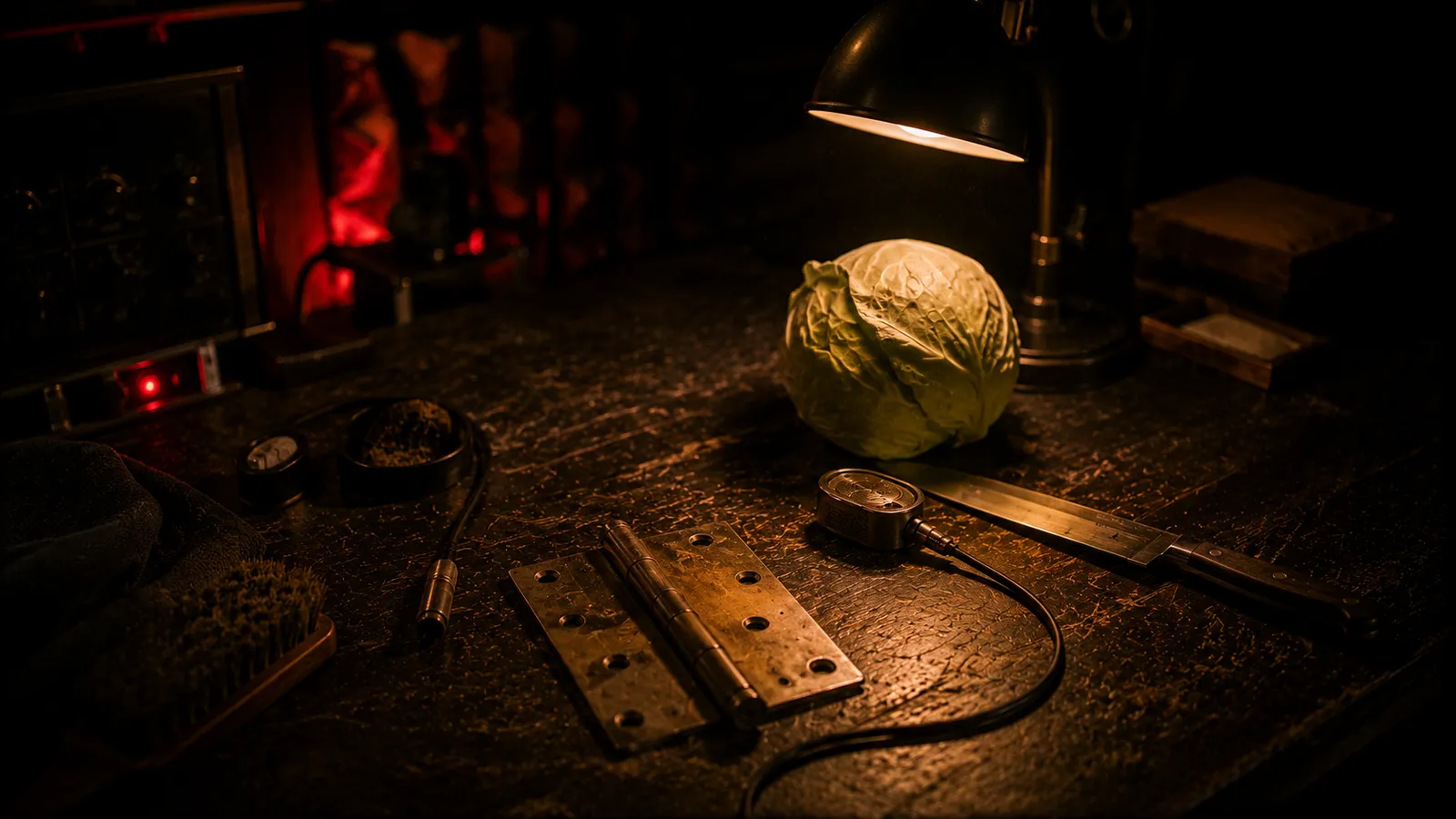
Some of the most memorable horror sounds in film history came from mundane objects recorded up close and repurposed entirely — celery snapping for breaking bone, a wet leather glove for something no one wants to picture too clearly, a melon for an impact best left to the imagination. The trick is proximity and context: recorded close and mixed into the right moment, an ordinary object stops sounding like itself and starts sounding like whatever the scene needs it to be. This is foley at its most inventive, and it's a genuinely fun problem to solve.
The jump scare is a rhythm trick
A jump scare that actually works is built on rhythm, not volume alone. The real technique is dropping the floor out first — pulling back the ambience, the score, even the room tone, for a beat or two right before the hit, so the sudden sound arrives against near-silence instead of an already-busy mix. That contrast is what makes the same sting feel twice as loud without actually being twice as loud. A scare thrown into a dense, noisy scene barely registers; the same sound after a held breath of quiet lands hard.
Risers, negative space, and layering it together
A riser — a sound that builds in pitch or intensity toward a moment — tells an audience something is coming before they consciously register why they're tense. Negative space, the moments deliberately left empty of music or effect, does the opposite job just as effectively, letting dread sit unresolved. The best horror sound design layers all of it together: a low rumble under the scene, a detuned drone for unease, room tone that thins as tension builds, a riser leading into a pulled-back silence, and then the hit. No single element does the work alone — it's the layering and the timing that sells it.
The takeaway
Horror sound design is craft, not noise for its own sake — infrasound, silence, dissonance, foley, and rhythm all doing specific, deliberate jobs. If you're building a horror project, a suspense podcast, or anything that lives or dies on atmosphere, this is exactly the kind of custom work covered on the sound design services page — more on the process in When Stock Sound Isn't Enough.
Building something that needs to genuinely unsettle an audience? Revolutionary Recordings has designed custom sound for creators across the Philadelphia metro and Mid-Atlantic since 2006. Book a session and let's talk about your project.