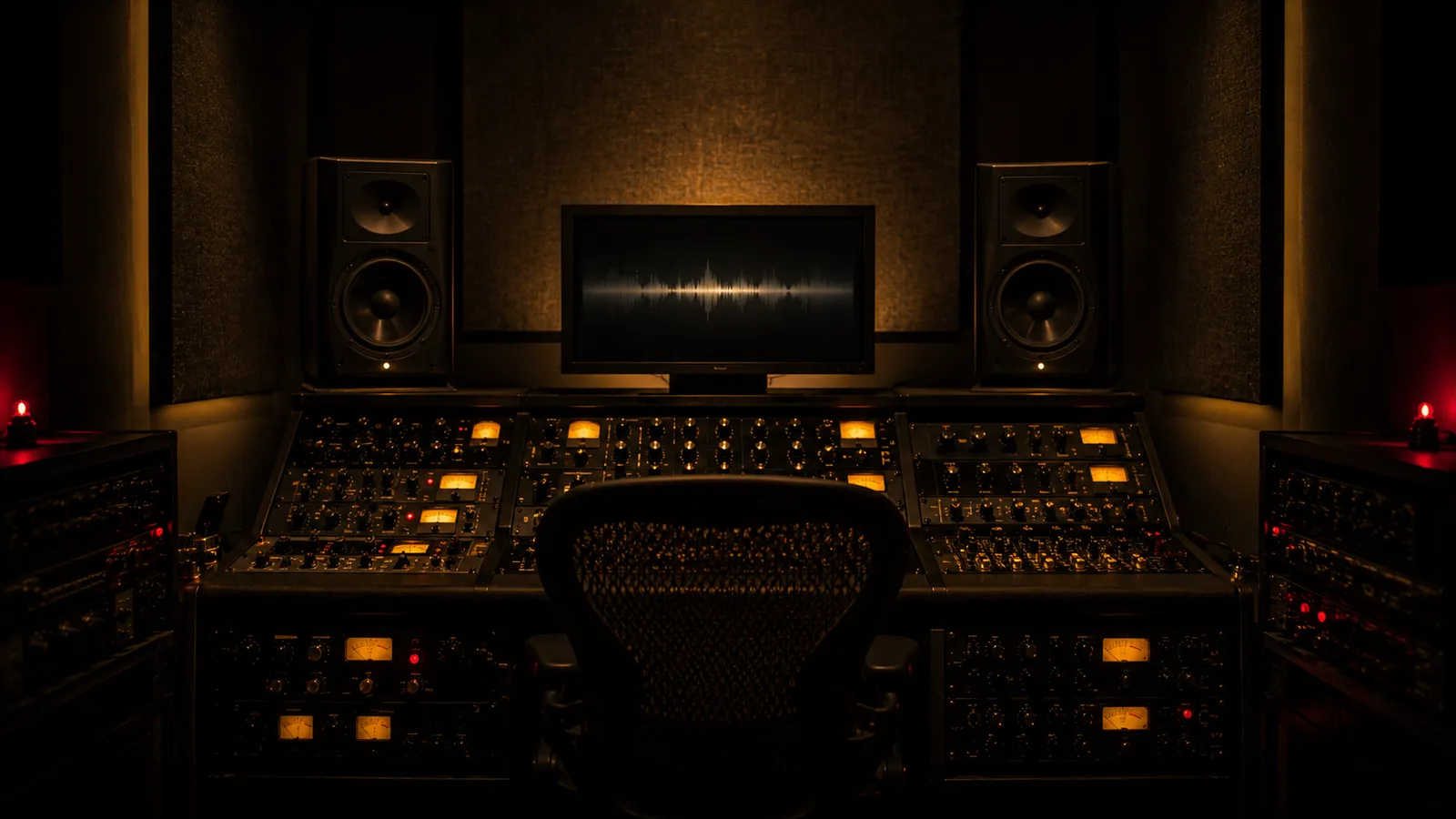
Ask five artists what mastering is and you'll get five answers, most of them some version of "it makes it louder." Loudness is part of it. But if that's all mastering did, you could skip it with a limiter plugin and call it a day — and your record would suffer for it. Here's what's actually happening in that last step, and how to know what your project needs.
Mastering is the final translation
A mix is built in one room, on one set of speakers, by ears that have heard the song five hundred times. Mastering is the step where the record gets prepared for every other room — earbuds, car stereos, club systems, phone speakers, vinyl. It's a fresh set of ears and a calibrated environment making the final calls on tone, dynamics, and level so the song holds up everywhere it's going to live.
Practically, that means careful EQ to fix tonal imbalances the mix room hid, dynamics control that brings the track to competitive loudness without crushing the life out of it, and sequencing decisions — gaps, fades, level-matching — that make a multi-song release feel like one coherent record instead of a playlist of strangers.
What mastering can't do
An honest engineer will tell you this up front: mastering polishes a mix, it doesn't rescue one. If the vocal is buried, mastering can't unbury it. If the low end is a mess, mastering can tilt it, not rebuild it. When a mix arrives with a problem that really lives at the mix level, I'll say so and we'll fix it there — because pushing a flawed mix through mastering just gives you a louder flawed mix.
That's also why every mastering project here starts after an approved mix. Get the mix right, sign off on it, then master. (If you're prepping files to send, read How to Send Tracks for Remote Mixing & Mastering first.)
Standard vs. stem mastering
Most tracks need standard mastering: you send the final stereo mix, I master it. Simple.
Stem mastering is the middle ground for tracks that are close but need a touch more control than a stereo file allows. Instead of one stereo mix, you send a handful of grouped stems — say drums, bass, music, vocals — and I can nudge the balance between them while mastering. It's the right call when the mix is 90% there but one element needs a different relationship to the rest, and remixing isn't practical.
If you're not sure which your track needs, send it over. I'll listen and tell you honestly — sometimes the answer is standard mastering, sometimes stems, and sometimes it's "let's touch up the mix first because that's what the song actually needs."
When to book it
Mastering happens once per song, after the approved mix, and you'll hear a first sample for feedback before anything is final. If you're planning a release date, work backward: mastering takes about a day per song once mixes are approved, and you want your distributor deadlines covered with room to spare.
Full details are on the services page, and if you want to talk through what your project needs, get in touch — we'll figure out the right path together.