Your first time in a real studio should feel like a milestone, not an ordeal. And the artists who walk out happiest are rarely the most experienced ones — they're the ones who showed up ready. Twenty years at the board have taught me one thing above all: preparation is the single biggest factor in how good your record sounds and how far your budget goes.
Here's how to get ready.
Know your songs cold
The studio is not the place to decide how the bridge goes. Every chord change, every lyric, every harmony should be muscle memory before you arrive. When you're not thinking about what comes next, you're free to think about how you play it — and that's where the great take lives.
Rehearse until the song feels boring. Then rehearse a little more. The goal is to make the performance automatic, so the only variable left in the room is feel.
Lock your tempos and keys in advance
Decide the actual BPM of each song before you walk in. Know the key. If you've been playing a tune live and it's crept up or down over the years, pick the version you want on the record and commit. Showing up with that decided saves real time — and time is the budget.
If you plan to track to a click, start practicing with one weeks ahead, not the night before. More on that in Recording to a Click Without Losing the Feel.
Do your own pre-production
The cheapest hour of studio time is the one you never have to book. Before you arrive, make rough demos on your phone. Listen back. Are the arrangements too long? Is there a key change that fights the vocal? Are two guitar parts stepping on each other? Fix that at home for free instead of discovering it on the clock. I go deeper on this in Rehearse Like You'll Record.
Service your instruments
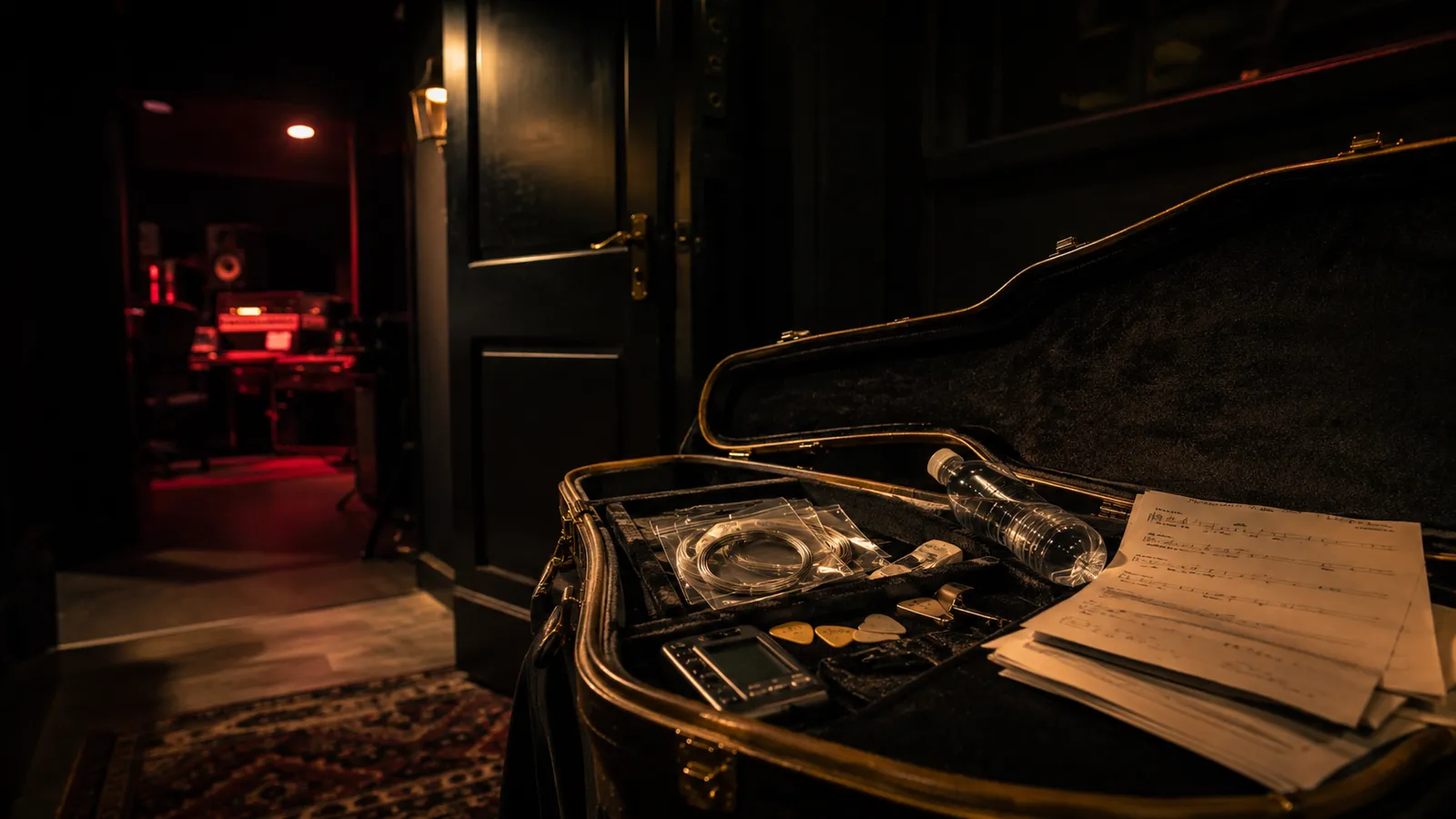
Fresh strings, a setup, a new drum head where it counts. A guitar that won't hold tuning or a snare that rings wrong will eat your session alive. Change strings a day or two before — not the morning of — so they have time to stretch and settle. Bring spares: strings, picks, sticks, cables, a 9V or two. The studio has backups, but your gear is what makes you sound like you.
Bring reference tracks
Pick two or three released songs that sound like where you want to land — tone, energy, space. You don't need the technical vocabulary; if you can play me a record and say "this," we're already most of the way to a shared target. References turn a vague feeling into a concrete direction.
Plan the logistics
Eat before you come. Bring water. Line up a ride if you're tracking late — sessions here run into the evening, and you don't want to be watching the clock for the wrong reason. If a bandmate is only needed for two songs, stagger arrivals so nobody's burning energy sitting on a couch.
Know what the day actually looks like
Here, you work directly with me from setup to final mix — no assistants, no handoffs. We'll get sounds dialed, then start tracking, usually building from a rhythm foundation up. There will be takes that don't work. That's normal and it's not a verdict on you; it's the process. The red light makes everyone tighten up at first. We'll get past it together, and I'll talk you through it. (If nerves are a real worry, read Nailing the Take.)
Trust the room
You spent months living inside these songs. My job is to hear them with fresh ears and help you capture them at their best. If I suggest a different tempo, a doubled vocal, a dropped part — it's in service of the song, not a critique of the work. The best sessions are a collaboration. Come in prepared, stay open, and we'll make something you're proud of for years.
Ready to book your first session? Revolutionary Recordings has tracked Mid-Atlantic independent artists since 2006, right here in the Philadelphia metro. Get in touch and let's plan it out.